India's Trusted Renewable Energy Consulting Firm

Power Your Business
with Smarter
Clean Energy

End-to-end energy consulting for C&I businesses — Captive & Group Captive power structuring, Open Access procurement, RCO compliance, and expert regulatory advisory aligned with the latest CERC & MoP frameworks.

New: RCO 2025 — Unified national obligation rises to 33% in FY 2025–26
RPO has been replaced by the Renewable Consumption Obligation. Open access consumers must now comply under a single national framework. See our state-wise impact guide →
50+
MW advised
30%
avg cost savings
100%
compliance rate
4+
states covered
🏭
Group Captive Active
CSS & Add. Surcharge waived
Energy Dashboard
Captive Power Savings
RCO Compliance Status
Tariff Exposure Risk
~₹3.0/unit
Captive Power Savings
↓ ~30%
vs DISCOM Tariff
📋
CERC Compliant
DSM 2nd Amend. 2025
CERC & SERC Regulatory Expertise
Captive & Group Captive Structures
Open Access — All States
RCO Full Lifecycle
Project Development 0 → Scale
24×7 Energy Compliance
What We Do

Transforming Power Procurement into Strategic Advantage

Expert advisory across the full energy value chain — from procurement to compliance, trading to green strategy.

🏭

Captive & Group Captive Power for C&I

Set up dedicated 26% equity captive structures or group captive arrangements that exempt your business from Cross-Subsidy Surcharge and Additional Surcharge. Significant tariff reduction with full regulatory protection.

Explore →

Open Access Power Procurement

End-to-end strategy to reduce power costs via Open Access — STOA/MTOA/LTOA approvals, bilateral sourcing, and tariff optimisation. Typical savings: 25–35% vs grid tariff.

Explore →
🌱

Renewable Sourcing & PPA Structuring

Helping C&I consumers transition to green power — Solar, Wind, Hybrid, RTC — with optimised commercial structures, bankable long-term PPAs, and VPPA frameworks.

Explore →
🏛️

Regulatory Advisory & Compliance

Expert support on CERC/SERC regulations, captive verification, Open Access approvals, DSM management, and impact assessment of new policy developments.

Explore →
📊

Energy Portfolio Management

Load forecasting, scheduling, DSM optimisation, and real-time decision support across captive, open access, and DISCOM supply portfolios to minimise total cost.

Explore →
🟢

RCO Compliance & Green Markets

RCO planning under the 2025 framework, REC procurement, and green attribute optimisation — keeping your C&I business fully compliant under the latest MoP norms.

Explore →
Captive Power for C&I

The Smartest Power Procurement Route for Industrial & Commercial Buyers

For large C&I consumers, captive and group captive power isn't just a procurement choice — it's the most cost-effective and regulation-protected way to source electricity in India. Captive consumers are fully exempt from Cross-Subsidy Surcharge (CSS) and Additional Surcharge under Section 9 of the Electricity Act, 2003, dramatically lowering landed cost compared to standard Open Access.

Linus Solution has structured captive and group captive arrangements for manufacturing companies, data centres, IT parks, and retail chains across India — handling everything from SPV formation and equity structuring to ongoing 26% / 51% compliance verification under Rule 3 of the Electricity Rules, 2005.

Discuss Your Captive Strategy →
Captive vs Open Access vs DISCOM
Indicative landed cost per unit (₹/kWh)
DISCOM (HT Industrial)
₹8.20
Open Access (with CSS + Add. Surcharge)
₹7.50
Group Captive (no CSS / Add. Surcharge)
~₹5.00
Pure Captive (26% equity, self-use)
~₹5.00
💰
~₹3 / unit
Typical savings via Captive route vs DISCOM tariff
Indicative figures for a typical 5 MW HT industrial consumer in India. Actual savings vary by state SERC, technology mix, voltage level, and PPA terms.
Why Captive Wins

Strategic Advantages of the Captive Route

Captive and group captive structures deliver benefits that pure Open Access simply cannot match for high-consumption C&I buyers.

🚫

No Cross-Subsidy Surcharge

Captive consumers carrying their own power for self-use are statutorily exempt from CSS — saving ₹1.50–2.50/unit in most states. Across SERC jurisdictions, this single exemption typically delivers the largest landed-cost reduction.

🛡️

No Additional Surcharge

Unlike Open Access consumers who face Additional Surcharge of ₹1.20–1.80/unit across most state DISCOMs, pure captive use is fully protected against this stranded-cost recovery levy.

📉

Tariff Certainty Long-Term

Lock in 15–25 year energy costs at fixed escalation through a PPA with your captive SPV — insulating your business from DISCOM tariff hikes and FPPCA pass-through.

🌱

Built-In RCO Compliance

Captive solar/wind generation directly counts toward your Renewable Consumption Obligation — eliminating the need to separately purchase RECs or pay buyout penalties.

🏭

ESG & Scope 2 Reporting

Captive RE drives directly verifiable Scope 2 emission reductions — strengthening your BRSR reporting, CDP scores, and global ESG ratings for export-led manufacturers.

💰

Equity Returns + Cost Savings

26% equity stake in the captive generating company means your business benefits both from low energy costs and equity returns on the underlying RE asset.

Captive Structures

Choosing the Right Captive Model

Three proven structures, each suited to different consumer profiles and balance-sheet preferences.

100% Captive

Standalone Captive

Single-consumer ownership of generation asset

  • 100% ownership of the generating company
  • 100% consumption of generated power for self-use
  • Maximum cost savings — no SPV-level revenue sharing
  • Best suited for consumers with stable, large baseload (10+ MW)
  • Full balance-sheet impact & project execution responsibility
Flexible

Captive + Open Access Hybrid

Combine captive baseload with OA exchange optimisation

  • Captive plant covers stable baseload (RCO compliance + cost certainty)
  • Open access & DISCOM cover variable peak load
  • Optimum risk-cost trade-off for complex load profiles
  • Suitable for multi-location consumers with varied state regulations
  • Maximum flexibility with portfolio-level cost optimisation
Our Approach

How We Set Up Your Captive Power Project

A proven 6-phase roadmap from feasibility to long-term compliance — typically 12–18 months from kick-off to commissioning.

01
Load Analysis & Site Selection

Detailed load profile analysis, technology mix (solar/wind/hybrid), and identification of optimum project location with resource assessment.

02
SPV Structuring & Equity Design

Captive generating company set-up, 26% / 51% equity-consumption matching, shareholder agreements, and tax-efficient structuring.

03
Regulatory Approvals

SERC captive status registration, Open Access for power wheeling, STU/DISCOM connectivity, environmental clearances, and CEA compliance.

04
PPA & EPC Execution

Bankable PPA between SPV and consumer(s), competitive EPC selection, financing tie-up with lenders, and construction supervision through COD.

05
Operations & Compliance

Annual captive verification (Rule 3, Electricity Rules 2005), SERC reporting, energy accounting, REC accounting, and DSM management.

06
Ongoing Optimisation

Hybrid additions, BESS retrofits, expansion as load grows, and adaptation to new SERC tariff orders and the Electricity Amendment Bill.

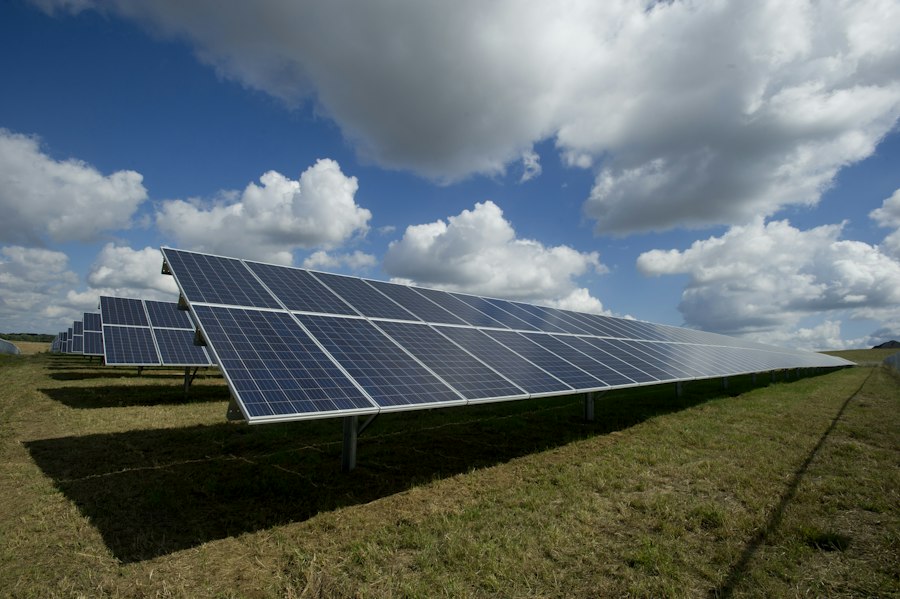
Utility-scale solar farm and renewable energy project development by Linus Solution in India
10+
Years building &
scaling RE projects
Deep Domain Experience

From a Single Site to a Full-Scale Green Portfolio

We don't just advise — we've been in the field. Our team has personally built, commissioned, and operated renewable energy projects across India, navigating every challenge from land acquisition and grid connectivity to power exchange trading and multi-state regulatory approvals.

Whether you're a manufacturer exploring Open Access for the first time, or an IPP scaling to 100 MW across multiple states, our experience spans every phase of the project lifecycle. We speak the language of engineers, traders, regulators, and CFOs equally.

1

Feasibility & Site Assessment

Solar irradiation analysis, wind mapping, grid proximity study, land due diligence, and bankability assessment — we evaluate viability before a single rupee is committed.

2

Regulatory Approvals & Licensing

CERC/SERC filings, Open Access applications, STU/CTU connectivity, environmental clearances, and CEA compliance — handled end-to-end across all states.

3

Project Development & Commissioning

EPC vendor management, grid evacuation design, metering & SCADA set-up, SLDC scheduling procedures, and commercial operations date (COD) planning.

4

Commercial Operations & Long-Term Compliance

Bilateral PPA management, captive verification (Rule 3 compliance), STOA/MTOA/LTOA renewals, energy accounting, RCO reporting, and continuous cost optimisation at scale.

Why Choose Us

Built on Real Project Experience

Our edge comes not from textbooks but from years of hands-on project work — across technologies, states, and regulatory environments.

🔋

Technology Agnostic

Solar, wind, hybrid, RTC, BESS — we evaluate what's right for your load profile, not what's easiest to sell.

🗺️

Pan-India Presence

Active experience across Haryana, Rajasthan, UP, Maharashtra, Gujarat, Karnataka, MP, and Andhra Pradesh.

⚖️

Regulatory Deep-Dive

In-house expertise on CERC, SERC, DSM, RCO, VPPAs, and the Electricity Amendment Bill 2025 — before they impact you.

🏭

Captive Structuring Expertise

Deep experience setting up captive and group captive SPVs across India — from 26% equity design to annual Rule 3 verification.

Our Journey

A Decade Navigating India's Energy Transition

From early state-level RPO frameworks to today's complex RCO regime, VPPA structures, and electricity futures — we've grown with India's power sector and built capabilities that few consulting firms can match.

🌱
FOUNDATION

Open Access Advisory

Began with hands-on SERC open access approvals for manufacturing clients across northern India, identifying ₹50+ Cr in tariff savings in the first cohort of engagements.

GROWTH

Captive & Group Captive Structuring

Designed captive and group captive SPVs for manufacturing groups, structuring 26% equity arrangements that unlocked CSS & Additional Surcharge exemptions and long-term tariff certainty.

🏗️
EXPANSION

Full Project Development

Took on end-to-end project development — land, approvals, EPC oversight, grid connectivity, and commercial operations commissioning from 0 to COD.

🌐
SCALE

Pan-India Portfolio & RCO Expertise

Managing multi-state energy portfolios under the new RCO regime, structuring VPPAs, and advising on Electricity Amendment Bill implications nationwide.

50+ MW
Portfolio under advisory
4+ States
Active regulatory presence
100%
Compliance rate maintained
10+ Years
In India's power sector
Our Process

From Assessment to Compliance — We Handle Everything

A structured, end-to-end approach that eliminates uncertainty and keeps your business protected at every stage.

01

Free Energy Audit

We analyse your consumption pattern, tariff structure, and regulatory exposure to identify savings opportunities.

02

Strategy Design

Custom energy procurement strategy including Open Access options, exchange trading routes, and RCO compliance roadmap.

03

Implementation

End-to-end execution — DISCOM approvals, PPA negotiations, IEX/PXIL trading set-up, scheduling and DSM management.

04

Ongoing Compliance

Continuous regulatory monitoring, REC management, DSM monitoring, and proactive impact assessment of new CERC/SERC orders.

Insights & State Regulations

Power Market Intelligence

In-depth analysis on CERC orders, state SERC updates, Open Access changes, and market trends across India.

View All Posts →
T-GNA NOAR procedure Grid-India inter-state open access
CERC
June 28, 2026

T-GNA Through NOAR: Complete Procedure for Inter-State Open Access (June 2026 Update)

Grid-India has issued Revision 2 of the T-GNA procedure through NOAR on 24 June 2026. Registration, standing clearance, application, and charges — the complete procedure decoded.

Read Article →

Karnataka KERC GNA Regulations 2026 industrial power
State RegulationKarnataka
June 15, 2026

KERC Draft GNA Regulations 2026: Karnataka's Network Access Goes Capacity-Based

KERC's draft regulations replace transaction-based open access with a capacity-based GNA model. What Karnataka C&I consumers should do before October 2026.

Read Article →
CERC market coupling power exchanges India
CERC
May 12, 2026

CERC Market Coupling 2026: One Price, Three Exchanges, and the Grid-India MCO Shift

CERC's phased rollout of market coupling, starting with DAM, reshapes how prices are discovered across IEX, PXIL and HPX. April 2026 draft makes Grid-India the sole MCO.

Read Article →
Electricity Amendment Rules 2026 captive power reform India
Captive Power
April 15, 2026

Electricity (Amendment) Rules 2026: The Biggest Captive Power Reform in Two Decades

Sweeping changes to captive verification, equity norms and group captive qualification. What every C&I captive consumer must know about the new rules.

Read Article →
CERC REC Amendment 2026 multipliers VPPA renewable certificates
CERC
April 2, 2026

CERC REC Amendment 2026: Multipliers, VPPAs and Self-Consumption Get a Reset

Technology-based multipliers up to 4× for offshore wind, 3× for BESS-RE. Regulation 14A creates a VPPA framework. Expanded eligibility for self-consumption RE.

Read Article →
CERC VPPA Guidelines Virtual Power Purchase Agreement India
CERC
February 20, 2026

CERC VPPA Guidelines: How Virtual PPAs Now Work for Indian C&I Buyers

CERC's December 2025 VPPA Guidelines establish a formal framework for Virtual Power Purchase Agreements — a credible third route for corporate renewable procurement.

Read Article →
CERC ISTS charges waiver inter-state transmission 2025
CERC
January 20, 2026

CERC ISTS Charges Waiver: The 2028 Cliff Every C&I Buyer Must Plan For

Full ISTS waiver until June 2025, tapering to zero after June 2028. What C&I open access buyers and developers must plan for now.

Read Article →
Punjab PSERC green energy open access banking 2026
State RegulationPunjab
March 18, 2026

PSERC 2026: Punjab Strengthens Green Open Access and Banking Rules

Punjab streamlines green open access and strengthens banking provisions, aligning with Haryana and Rajasthan. What Punjab industries should do now.

Read Article →
Frequently Asked Questions

Captive Power, Open Access & Renewable Energy — Answered

Common questions from C&I consumers exploring captive power, group captive arrangements, open access, and RCO compliance in India.

What is Captive Power for C&I consumers in India?

Captive Power is electricity generated for self-use by a consumer or a group of consumers under Section 9 of the Electricity Act, 2003. To qualify, consumers must hold at least 26% equity in the generating company and consume at least 51% of the generated power (Rule 3 of the Electricity Rules, 2005). Captive consumers are statutorily exempt from Cross-Subsidy Surcharge (CSS) and Additional Surcharge, making it the most cost-effective procurement route for industrial and commercial buyers in India.

How is Group Captive different from Open Access?

Group Captive consumers hold equity in the generating SPV and qualify for exemption from Cross-Subsidy Surcharge (CSS) and Additional Surcharge. Open Access consumers, by contrast, pay both these levies in addition to wheeling and transmission charges. As a result, Group Captive typically delivers ₹2–3 per unit lower landed cost than standard Open Access for the same renewable energy — a substantial structural advantage for high-volume C&I consumers.

What is the RCO framework under the Energy Conservation Act 2001?

The Renewable Consumption Obligation (RCO) replaces the older state-level RPO regime with a unified national mandate notified by the Ministry of Power. From FY 2024–25 onwards, designated consumers — including Open Access users, DISCOMs and captive plants — must meet escalating targets: 29.91% in FY 2024–25 rising to 43.33% by FY 2029–30 of total electricity consumption. Compliance can be met through direct renewable consumption, REC purchase, or buyout payment to the Central Energy Conservation Fund.

How much can a C&I consumer save with Open Access or Captive Power?

Typical savings range from 25–35% versus DISCOM industrial tariffs for Open Access consumers, and up to 40% for Group Captive or Pure Captive arrangements due to the statutory exemption from CSS and Additional Surcharge. For a typical 5 MW HT industrial consumer in India, this translates to indicative landed costs of around ₹7.50/unit for Open Access versus ~₹5.00/unit for captive routes — savings of ~₹3 per unit. Actual savings vary by state SERC, technology mix, voltage level and PPA terms.

Which states does Linus Solution operate in?

Linus Solution has active project development and regulatory experience across multiple states including Haryana (HERC), Rajasthan (RERC), Uttar Pradesh (UPERC), Maharashtra (MERC), Gujarat (GERC), Karnataka (KERC), Madhya Pradesh (MPERC) and Andhra Pradesh (APERC). We work directly with the respective State Electricity Regulatory Commissions, DISCOMs, STUs and SLDCs to deliver state-specific Open Access, captive and renewable energy solutions for C&I clients.

How long does it take to commission a captive renewable power project?

A typical captive renewable power project takes 12–18 months from kick-off to Commercial Operations Date (COD). This covers six phases: feasibility & site assessment, SPV structuring & equity design, regulatory approvals (SERC captive status, Open Access, environmental clearances), PPA & EPC execution, commissioning, and the start of operations & compliance. Group Captive structures may complete faster when leveraging existing developer infrastructure.

What is the difference between STOA, MTOA and LTOA Open Access?

Short-Term Open Access (STOA) covers transactions up to one month with day-ahead/real-time scheduling. Medium-Term Open Access (MTOA) covers contracts from 3 months up to 3 years, suited for bilateral or exchange-based procurement. Long-Term Open Access (LTOA) covers contracts of 12+ years and is typically used for captive plants and long-duration renewable PPAs. Each has different connectivity, approval and charging implications under the CERC and state Open Access regulations.

Do you handle the regulatory approvals end-to-end?

Yes. Linus Solution handles complete regulatory lifecycle management — SERC captive status registration, Open Access applications (STOA/MTOA/LTOA), STU/CTU connectivity, environmental and CEA clearances, DISCOM coordination, and annual captive verification under Rule 3 of the Electricity Rules 2005. We also monitor and provide impact assessment on new CERC orders, the upcoming Electricity Amendment Bill 2025, and state-level tariff orders that affect your power procurement strategy.

Get In Touch

Let's Reduce Your Energy Costs & Keep You Compliant

Whether you're a C&I consumer exploring Open Access for the first time, or an IPP optimising trading across states — our team is ready. Book a free energy assessment with no obligation.

📞
Phone
Monday – Saturday, 9 AM – 6 PM IST
✉️
Email
We respond within 24 hours
📍
Office
Karnal, Haryana, India
Serving pan-India C&I and IPP clients
Free Assessment Includes
Consumption analysis · Captive feasibility study · Open Access savings estimate · RCO compliance gap check · State-specific regulatory roadmap
Request a Free Energy Assessment
Our expert will reach out within 24 hours — no obligation.
🔒 Your details are confidential. No spam, ever. Response within 24 business hours.