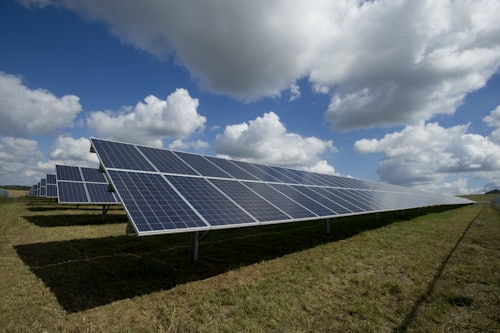
Few states match Rajasthan for renewable energy potential. With over 325 sunny days per year and some of the highest wind speeds in northern India, the state has emerged as a national hub for utility-scale solar, wind, and increasingly, hybrid renewable projects. For C&I consumers in Rajasthan — whether textile manufacturers in Bhilwara, cement plants near Chittorgarh, or marble processors in Kishangarh — the question has never been about renewable resource availability. It's been about regulatory clarity.
The RERC Green Energy Open Access Regulations, 2025, notified in early 2025, provide that clarity. They establish the rules under which Rajasthan industries can procure green electricity through open access, the conditions on new renewable projects, and the role of state agencies in administering the framework.
Why Rajasthan matters for renewable open access
Three structural factors make Rajasthan exceptional for renewable open access:
- Resource quality: Solar irradiation across western Rajasthan averages 5.7–6.3 kWh/m²/day; wind speeds in Jaisalmer, Barmer, and Bikaner regions exceed 7 m/s. The capacity utilisation factors achievable in Rajasthan are among the highest in India.
- Land availability: Unlike densely populated states, Rajasthan has vast tracts of low-cost, low-conflict land available for utility-scale renewable development.
- Strong inter-state evacuation infrastructure: The Green Energy Corridor connects Rajasthan to demand centres in Haryana, Delhi, Maharashtra, and Karnataka, enabling inter-state open access at scale.
The GEOA framework — eligibility & process
Under the RERC GEOA 2025 framework:
- Eligibility threshold: Consumers with contracted demand of 100 kW and above are eligible to opt for green energy open access. Multiple connections of the same consumer can be aggregated.
- Application portal: Applications for short-term, medium-term, and long-term open access are routed through the central portal (national single window for OA approvals).
- State Nodal Agency: Rajasthan Rajya Vidyut Prasaran Nigam (RVPN) acts as the State Nodal Agency for LTOA and MTOA applications, coordinating with the State Load Despatch Centre (SLDC) and the DISCOMs.
- Approval timelines: Standardised timelines apply — short-term applications are processed within days, while long-term applications follow the detailed connectivity and grid planning process.
Mandatory BESS for new 5+ MW projects
One of the most consequential provisions of the 2025 framework is the Battery Energy Storage System (BESS) mandate for new renewable projects. The regulation requires that new RE projects of capacity above 5 MW seeking open access in Rajasthan must install storage capacity alongside generation.
For C&I consumers procuring under long-term PPAs from Rajasthan-based developers, this has two effects:
- Higher PPA tariffs — BESS adds capex and opex, which flows into the PPA price. Expect a 15–25% increase in landed cost for hybrid projects versus pure solar.
- Materially better quality of supply — Storage smooths the variable solar/wind output, reduces DSM exposure, and enables firming services that increase the practical value of the power.
For consumers with high load factors and round-the-clock requirements, the BESS mandate is actually a benefit — it brings PPAs closer to baseload behaviour. For consumers needing only daytime solar, the mandate may shift them toward smaller projects below the 5 MW threshold or toward inter-state procurement from non-Rajasthan generators.
Banking provisions & 8% deduction
Banking — the ability to "deposit" surplus renewable generation with the DISCOM during one period and withdraw it during another — is a critical feature for time-shifting solar generation to evening industrial loads.
The RERC 2025 framework provides for banking with the following conditions:
- Permitted: Banking is allowed for renewable open access transactions.
- Banking charge: A deduction of 8% of the banked energy is applied at the time of withdrawal — meaning if you bank 1,000 units, you can draw 920 units.
- Banking window: Energy banked must be drawn within the same financial year; unwithdrawn banked energy lapses.
For solar consumers whose generation peaks at midday while their industrial load runs through the day and evening, the 8% banking deduction is a real but manageable cost. It is materially better than the energy being settled at the substantially lower DSM rate.
Charges applicable in Rajasthan
The cost stack for a Rajasthan GEOA consumer typically includes:
| Component | Indicative Range (₹/unit) |
|---|---|
| Generation tariff (per PPA) | ₹3.00 – 4.50 |
| Wheeling charges (intra-state) | ₹0.30 – 0.60 |
| Transmission charges (HVPNL / state) | ₹0.25 – 0.40 |
| Cross-Subsidy Surcharge (CSS) | ₹1.20 – 2.20 |
| Additional Surcharge | ₹0.50 – 1.40 |
| Banking deduction (8% of banked energy) | Indirect cost |
| SLDC, scheduling & reactive energy charges | ₹0.05 – 0.15 |
Actual values depend on the consumer's voltage level, the DISCOM area (Jaipur, Ajmer, Jodhpur), and the specific tariff order for the year. For long-term open access transactions in solar and wind, exemptions and reliefs may apply.
Strategic implications for Rajasthan industries
For Rajasthan-based C&I consumers, the 2025 GEOA framework strengthens — but doesn't fundamentally change — the underlying logic:
- Open access is real and accessible for consumers above 100 kW, with standardised processes through the central portal.
- Captive and group captive remain superior for high-volume consumers — the CSS and Additional Surcharge exemption deliver structurally lower landed costs than even amended GEOA.
- BESS-paired procurement is becoming the norm. Whether through the 5+ MW mandate or through voluntary inclusion of storage, the future PPA in Rajasthan will increasingly be a firmed renewable product, not pure solar or pure wind.
- Banking helps but doesn't replace storage. The 8% deduction makes banking economical only for limited time-shifting; deeper time-shift needs BESS.
Rajasthan industries that move early to lock in long-term renewable contracts — particularly hybrid solar+wind+BESS arrangements — will benefit most. As the state's RE capacity continues to grow rapidly, transmission corridors will tighten, and the queue for new long-term open access approvals will lengthen. Today's relatively open process won't last indefinitely.
Want a Detailed Report on This Topic?
Receive an in-depth report tailored to your business — covering financial impact, compliance roadmap, and the procurement strategy that fits your load profile. Free, confidential, delivered within 48 hours.
Get Detailed Report →